 Dil

Four questions decide whether an electric heating cable manufacturer is worth shortlisting, and unit price is not one of them: can the factory really extrude and assemble the cable family your line needs, can it prove that with batch test data, does it supply the matching thermostats, junction boxes and tapes as one system, and has it delivered comparable work in your industry and climate? Answer those and a list of twenty suppliers usually shrinks to three.
Buyers who start with the price often pay twice. A self-regulating cable with an unevenly cross-linked core can pass a day-one test and still lose a third of its output within two winters; re-insulating and re-tracing a hundred metres of pipe costs far more than the gap between a dependable cable and a cheap one.
Match the Cable Technology Before You Compare Suppliers
The duty should define the shortlist, not the reverse. A factory that excels at self-regulating tapes for freeze protection may have no experience of a two-kilometre steam-traced line, and a mineral-insulated specialist may never have supplied a floor-warming mat.
Self-regulating cables: the default for freeze protection and floor warming
For most pipe, tank, roof and underfloor duties, a self-regulating cable is the pragmatic answer. Its conductive polymer core raises resistance as it warms, so output falls on its own and the cable tolerates overlapping better than a fixed-output design. It can also be cut to length on site. Confirm three things: the minimum installation temperature, the output still available at the coldest ambient on your site, and jacket suitability for the chemicals and UV exposure present.
 SANTO UFA Self-Regulating Heat Tracing CablesSelf-regulating cable for pipe and vessel frost protection and process maintenance up to 65°C, with polyolefin or fluoropolymer jackets and hazardous-area approvals.View Product →
Power-limiting and constant-wattage cables: steady output for longer runs
Longer, hotter or more precise lines need constant-wattage or power-limiting cable. Output barely shifts with ambient temperature, so heat-loss calculations stay predictable, but thermostatic control becomes mandatory: overlapped or uncontrolled constant-wattage cable overheats locally. Ask for the maximum circuit length and the thermostat range the supplier recommends.
Mineral-insulated and skin-effect systems: high temperature and long distance
Steam lines and high-temperature process piping usually point to mineral-insulated cable. Sheath choice matters: 321 stainless steel covers most industrial work, while Alloy 825 is chosen where chlorides or aggressive atmospheres are present. On pipelines measured in kilometres, skin-effect tracing is often more economical because heat is induced in the pipe wall itself; ask for references at that scale rather than a datasheet alone.
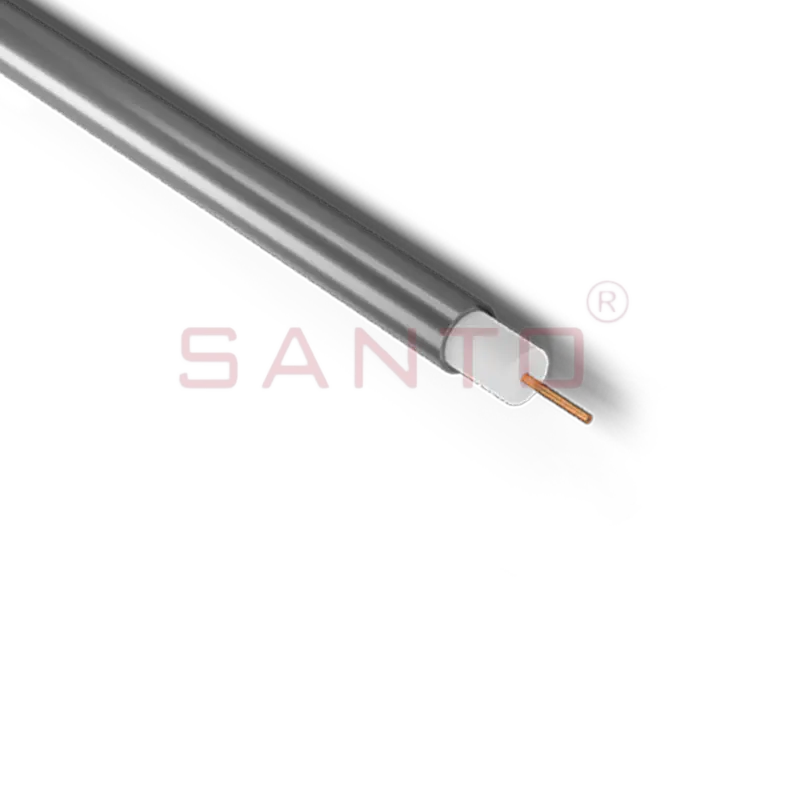 SANTO Alloy 825 Sheathed Mineral Insulated Heating CableFor steam lines and high-temperature piping, this Alloy 825-sheathed MI cable suits chloride or aggressive environments with freeze protection and temperature maintenance.View Product →
| Cable family | Typical duty | What to verify |
|---|---|---|
| Self-regulating | Pipe and tank freeze protection, roof de-icing, underfloor mats | Minimum installation temperature, output at coldest ambient, field cutting and overlap rules |
| Power-limiting | Medium-length industrial lines needing predictable output | Behaviour under ambient swings, approved thermostat range |
| Constant wattage | Long pipelines and high-temperature process lines | Maximum circuit length, mandatory thermostat, local overheating risk |
| Mineral insulated | Steam lines and fire-resistant duties | Sheath material, bend radius, cold-lead termination quality |
| Skin-effect | Very long pipelines | Reference installations at a similar scale |
Ask each shortlisted supplier which of these families they make on their own line and which they resell. The answer explains most of the price difference.
Six Factory Checks That Are Hard to Fake
Evidence that only a producer can supply separates manufacturers from trading offices. Six checks do most of the work.
| Check | What to ask for | Warning sign |
|---|---|---|
| Extrusion and cross-linking | A live video walk-through of the line and the test bench | Only catalogue photos and stock images |
| Batch testing | Insulation resistance and output reports tied to your production batch | Generic or undated sample report |
| Model consistency | Identical codes, dimensions and power tables across two quotations | Codes change between quotes without explanation |
| Documentation set | Specification sheet, manual, certificates, packing specification | Photocopied manual with no revision number |
| Hazardous-area scope | Certificate number and scope for each thermostat and junction box | "Explosion-proof" claimed verbally only |
| Export record | Named installations in your region and industry | Cannot name one project outside its own province |
A twenty-minute call in which someone opens the warehouse and tests a sample on camera tells you more than twenty pages of brochure.
Documentation and Certification: Ask for the Whole File
A dependable manufacturer sends the full document set before the order, not after. If a specification sheet takes three reminders to arrive, expect the same effort when a joint fails in the field.
- Specification sheets stating rated voltage, output at a reference temperature, dimensions, jacket material and maximum circuit length.
- Batch-traceable output and insulation-resistance test reports rather than generic sample data.
- Installation manuals with revision numbers covering spacing, terminations, thermostat placement and commissioning tests.
- Certificates with scope and number for every hazardous-area thermostat, sensor and junction box.
- Material certificates for mineral-insulated sheaths, plus RoHS and REACH statements for European projects.
Read the scope of an Ex certificate, not the cover page: model number, temperature class, gas or dust group and ambient range all have to match your installation.
How to Read a Quotation: Cost, MOQ and Lead Time
Compare installed cost per metre of protected pipe, not cable price per metre. Once terminations, controls, fixing accessories and testing are counted, the cable is usually the smaller share of the total.
| Cost line | What a complete quote states | Hidden cost if omitted |
|---|---|---|
| Cable | Family, model, output at rated voltage, jacket, spool length | Cutting and splicing labour later |
| Terminations | Cold-lead length, heat-shrink kit, junction box model | Field-made joints, the most common failure point |
| Controls | Thermostat and sensor type, enclosure rating, set range | Overheating, nuisance tripping, non-compliance |
| Accessories | Foil tape, fixing tape, cable cards, brackets | Extra site purchases and slower installation |
| Testing and packing | Batch report, spool size, lead time, Incoterms | Freight damage and disputes after a failure |
Minimum order quantities usually follow the jacket extrusion run rather than the number of metres, so ask whether the minimum applies per model or per order. Lead time tracks the extruder schedule more often than stock, which is why a realistic delivery date is a better sign than an optimistic one.
Accessories and Controls Decide Whether the System Survives
The cable is rarely the weakest link; the joints and the control layer are. A good self-regulating cable fitted with untested terminations and a domestic thermostat will fail long before the cable itself does.
Match control devices to the hazard. A surface-sensing thermostat is fine in a general area, while classified zones need an explosion-proof enclosure and a sensor rated for the process temperature. Sensors reading up to 482°C and electronic controllers with dual displays are standard options for higher-temperature work, and mechanical or capillary thermostats remain a sensible fallback where power quality is poor.
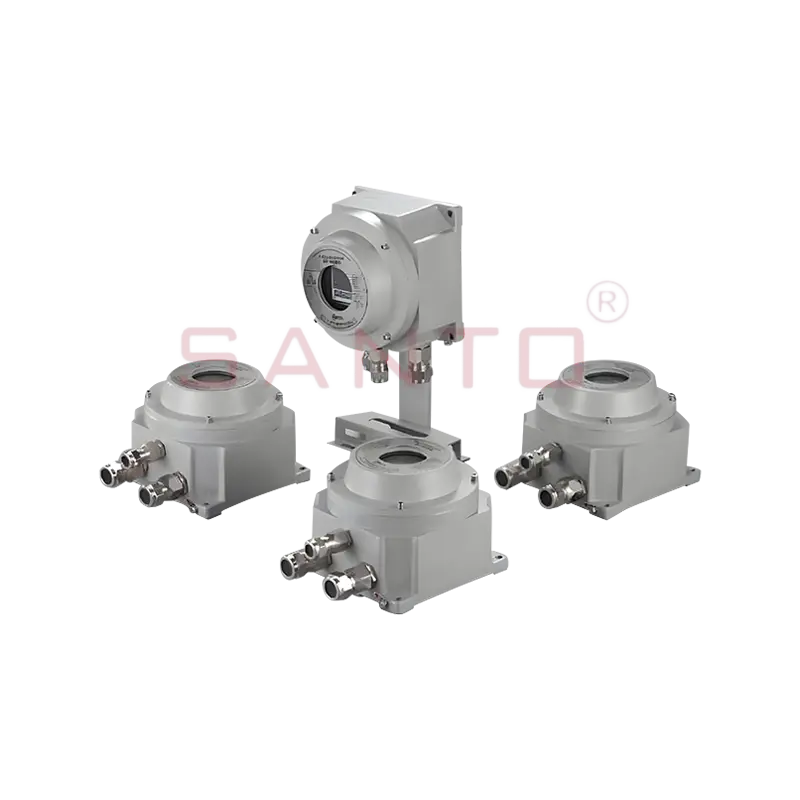 HDBK-WK Series Intelligent Explosion-Proof Temperature ControllerExplosion-proof controller for electric tracing terminal temperature control, offering protection, monitoring, communication, and replacing mechanical thermostats in petrochemical, gas, and power settings.View Product →
Treat the small parts as part of the specification: aluminium foil tape spreads heat across the pipe wall, pressure-sensitive tape secures the cable during installation, and cable cards keep spacing even on long runs.
Red Flags That Justify Walking Away
- Model codes that change between the quotation and the datasheet with no explanation.
- Output curves supplied without a reference temperature or tolerance.
- A certificate of conformity with no batch traceability.
- A thermostat described as explosion-proof with no certificate number.
- Prices far below the market with no specification difference offered in return.
- Refusal of third-party inspection or a pre-shipment test.
Frequently Asked Questions
Should I buy from a manufacturer or a distributor?
Buy directly when you need volume, non-standard lengths or technical support during commissioning. A distributor earns its margin when you want small quantities quickly from local stock, or when local warranty handling matters more than price.
How many suppliers should stay on the shortlist?
Three: one established producer, one competitive alternative with comparable test data, and one backup that can meet the delivery date. More than that becomes a paperwork exercise.
Self-regulating or constant wattage for a long pipeline?
As a rule, self-regulating cable covers freeze protection on lines of a few hundred metres with moderate heat loss. Long lines, high maintain temperatures and duties where output must be predictable point to constant-wattage or skin-effect systems with thermostatic control.
How can I check performance before installing everything?
Install a test section of five to ten metres under normal insulation, energise it at the design voltage and measure current and surface temperature after stabilisation. Compare the result with the manufacturer's output curve at the same ambient; a gap beyond ten per cent deserves a conversation.
Putting the Checklist to Work
Choosing an electric heating cable manufacturer is a documentation exercise dressed up as a purchasing decision. Match the family to the duty, demand traceable test data, insist on the full accessory and control package, and read the quotation as a system price.
As a benchmark for the technical detail worth expecting, these notes on what to consider when choosing self-regulating cables show the level of reasoning a supplier should be able to explain. When your shortlist is ready, you can send the specification directly and compare the responses line by line.


